A Void is one of the old songs that had been piling up for ages by the point In Consequence was to be recorded, having unlikely Bay Area thrash influences (more on that later) reminiscent of rebellious adolescence.
Interestingly, there had been a point, when I tried to rewrite the lyrics in a lipogrammatic fashion like Georges Perec‘s novel of the same name, something that would have to be posted here if I manage to ‘excavate’ and retrieve those notes!
The song itself can be viewed as a celebration of loss and affliction, and I find the title is quite matching with its deeply sad tone. I remember years ago, a supervisor in a bar I was working at (for supplemental income whilst still maintaining the flexibility to do gigs, standard practice in the industry) told me once or twice: ‘I really like your music, I just don’t get why it should be that depressing!’; whilst when that was released, we would get feedback from several people telling us that they cried after listening to it and that they found their experience to be oddly meaningful and cathartic, exactly as it was the case with Next Illusion to Fade. David Hume would be proud of us for doing our bit to resolve and reconcile, the paradox of painful art, dispensing the joys of furthering one’s understanding through aesthetic cognitivism by taking our listeners to dark places.
The diminished chord in the main musical theme wouldn’t be placed there hadn’t we ever listened to Slayer‘s ‘Seasons in the Abyss‘ and the narrative-like vocal, in hindsight, appears to have been influenced by Dave Mustaine‘s performance on ‘Dawn Patrol‘ out of their Rust in Peace album. Totally unconventional, as one would expect The Smashing Pumpkins or Alice in Chains to have been our primary influences, (or Leonard Cohen and Tom Waits for that matter) but our blood’s boiling point was quite higher than that when we were teenagers.
Finally, a few words about Afsoon Sahriari‘s nightmarish Yellow Submarine-like masterpiece, that has caused some pretty diverse reactions.
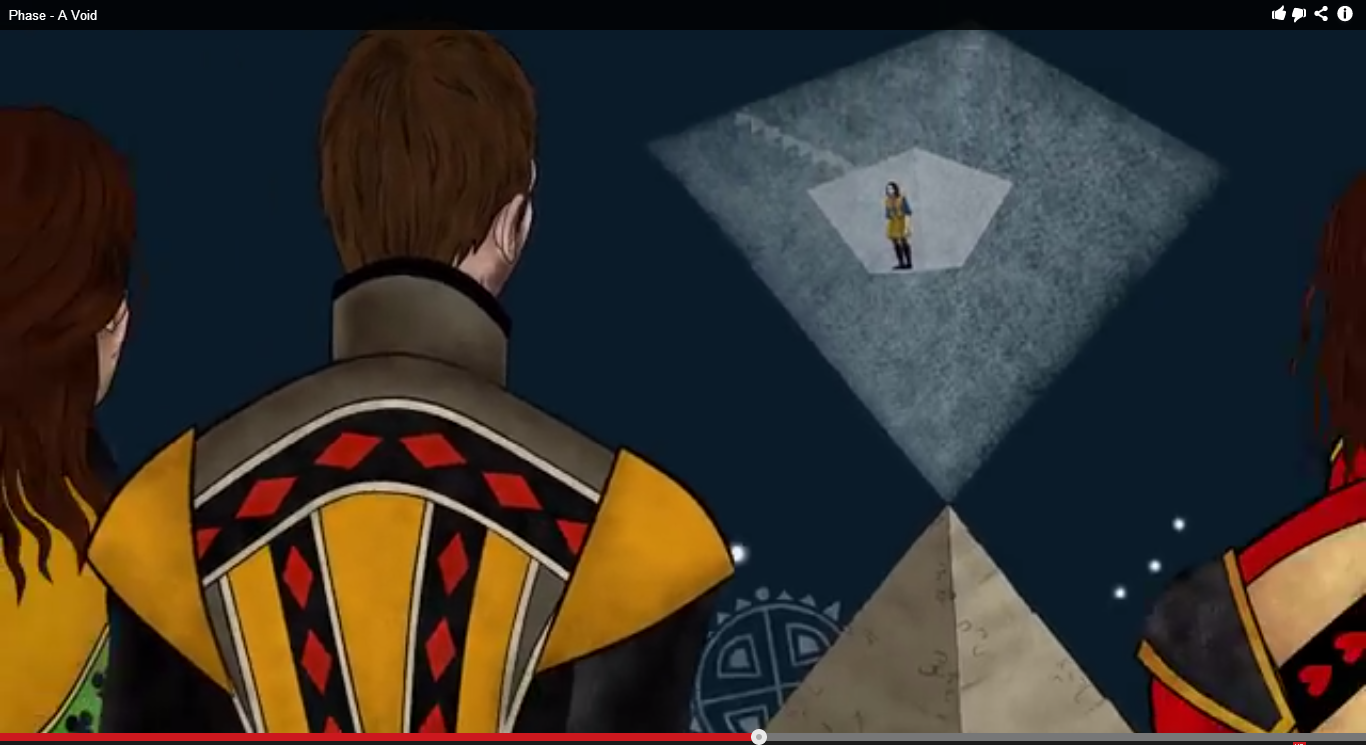
Afsoon had listened to our music and really loved it, so following her contacting us, we decided we would do something together, as we were equally (if not more) mind-blown by her work. So everybody on the Phase camp was tasked to come up with some video ideas, but as nobody did their homework; I came up with a story right before the deadline we had set for ourselves was due.
There are many intertwined themes addressed or alluded to in the video, ranging from alienation, mental health, egotism, narcissism, solipsism, empathy gap, social dynamics, fierce unethical competitiveness, mysticism, conspiracy theories, pop culture, role modeling, Alice in Wonderland, Tim Burton‘s macabre universe… You name it! It was our first video ever, and I think I must have thought:
”Great! Now let’s put everything we’ve ever encountered in it, as if there’s no tomorrow!”
There’s a Greek saying that goes like: ‘Since we’ve found a priest, let’s bury five or six’, that stems from remote villages in the mountains and the lack of those being serviced by the church to that effect, that when the opportunity would rise they would take advantage of it and talk in jest of burying their dying in absence of any dead; and that is exactly what happened there. The opportunity presented itself and we seized it.
A Pyramid Scheme of Influences
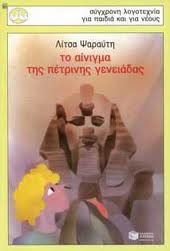
When I was a pre-teen in the mid-nineties, my uncle got me a book by Litsa Psarafti that had actually recently been awarded. The premise revolves around a couple of teenagers who met and fell in love, while the heroine was visiting the Giza plateau as a tourist, and they found themselves entangled in a great mystery they were allured into solving. All that before Dan Brown‘s infamous bestseller.
At the same point in life, I would binge on anything I could find about ancient Egypt, from really old encyclopedias my elder cousins owned to books (I vividly remember I owned a Greek translation of Andre Pochan‘s ‘L ‘Enigme de la Grande Pyramide‘ which I loved until I had it lent to someone to never see it again.), or the typical ‘esoteric’ magazines with insufficient bibliography or credibility. That was way before Wikipedia and around the advent of Microsoft‘s Encarta.
For some unknown, peculiar, reason, the regional telly had broadcasted either a talk or a documentary of Graham Hancock‘s in the late 90s about his speculative pseudo-archaeological ideas of how the pyramids are an astrological map, the Sphinx being built in the astrological era of Lion as per the precession of the equinoxes, Orion‘s belt alignment with one of the shafts of the great pyramid known as the Orion correlation theory, etc., and I remember I was really impressed by the fact that he didn’t seem all-mad as a hatter, unlike his counterparts, no matter how far-fetched some of his theories sounded, as well as from how well spoken he was.
I also remember having discussions about the matters mentioned above with a homeless alcoholic busker from Ireland called Thomas, who was wandering about our hometown in the early 2000’s. Before the internet revolution, and before everyone got online with the advent of social media, when it was hard to research and find sources; confirmation bias worked in a bit of a serendipitous manner, where one’s intuitions, or half-knowledge, was randomly affirmed by people who have equally had half-heard the same or similar thing. Nowadays, one inhabits an appropriate for them online echo chamber, by reason of keeping themselves around people with the same intuitions (and obsessiveness) on social media; being sheltered that way from the hipster revivalists who binged too hard on Big Bang Theory, which taught them that being a geek is cool, and their superpower is googling and being opinionated. Not a great set to choose from when it comes to group identity if you’re asking me.
By the way, I didn’t know who Graham Hancock was, until I stumbled upon one of his recent talks (he is apparently enjoying some newly found popularity nowadays), and while I have to admit he still comes across as intriguing, he has stepped up his game, proposing even more unconventional/controversial ideas about the benefits of consuming ‘entheogens’, the ‘ayahuasca experience’ and so forth.
I can’t stress how much I was really interested in all things mystery growing up. Being intrigued by it, and totally running towards it; then again, like every other teenager does I suppose. It’s like a Phase (pun intended) in some people’s lives when the death drive kicks in. It is like some sort of a rite of passage; or a subconscious symbolic acknowledgment of how little we know about our own selves at the time, and perhaps an attempt to explore ourselves and accept/embrace that fact at the same time. It’s a mind-boggling phenomenon and arguably the cornerstone for marketing, religious drama (to be fair, sacrament is the direct translation of the Greek μυστήριο-mystérion for mystery in Christian Latin), the initial stages of courting (Despite Jean-Paul Sartre possibly labeling that as ‘bad faith’) etc. but I’m digressing (Again!)…
Further on confirmation bias
Somewhat 10 years ago, a friend lent me Foucault’s Pendulum and by reading it I quickly realised how he got the message wrong, or at least how he completely dismissed Umberto Eco‘s criticism of the matter he thought was promoted in that lengthy work of his. I am mentioning that because I feel it’s quite pertinent, as the book’s premise itself is about editors of mystery magazines/books who were skeptics, ending up entertaining conspiracy theories themselves. I really have so many cautionary tales, from situations I’ve witnessed throughout my life, regarding how cognitive bias works, and how people are seeking affirmation for the strangest theories they’d encounter in the strangest places, but those perhaps are stories for some other time.
Illuminot-So-Secret
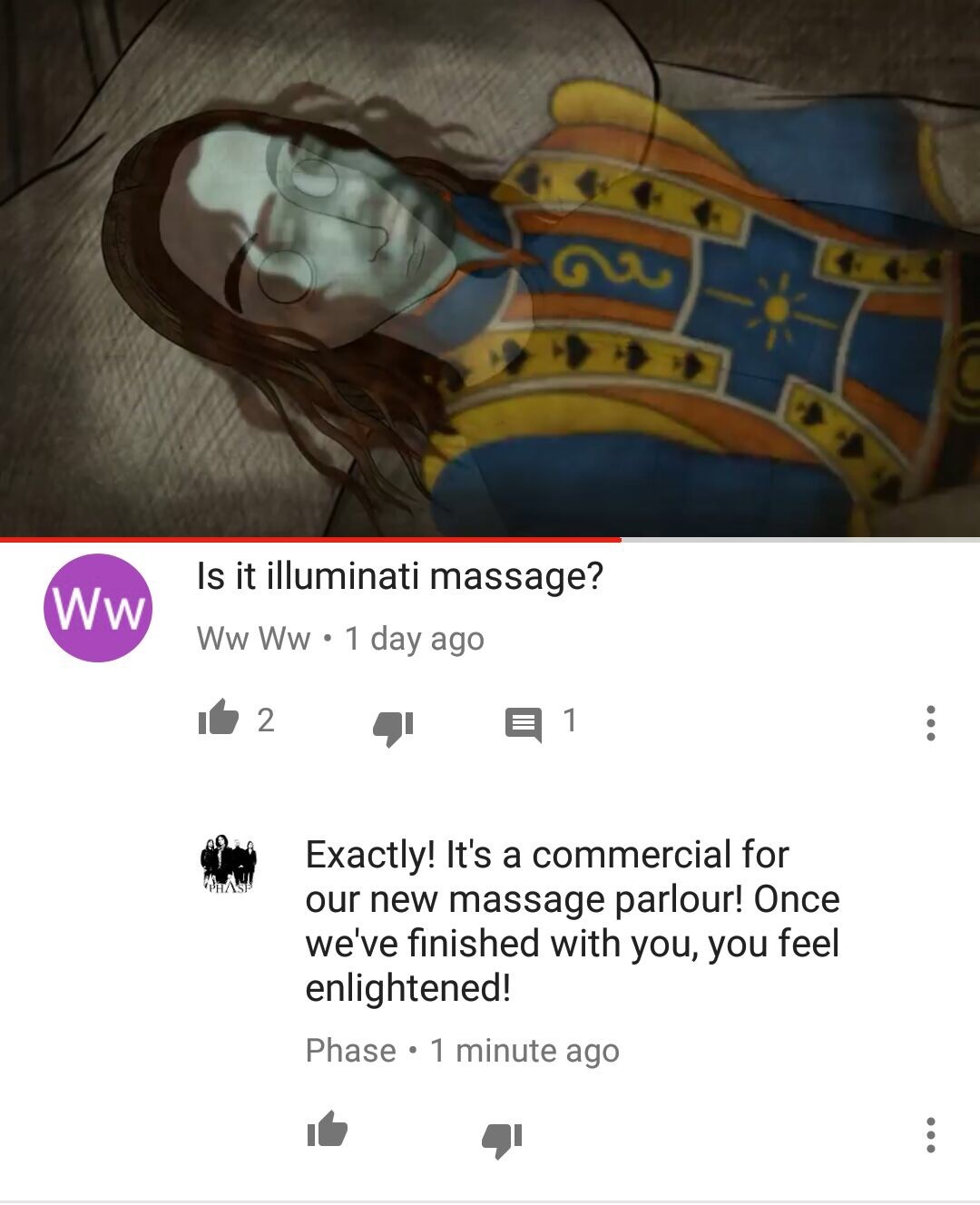
Another thing that happened to us, was when we didn’t get a gig at Uni because we licensed our debut single Perdition to Microsoft before we did the record, and we were accused of that agreement being a product of lobbying with the Masonic order of the Illuminati (Don’t do drugs folks!). Some details you might find interesting would be that the fellow who maintained that, was also refusing to carry any branded carrier bags not to advertise businesses, was wearing branded T-shirts inside out for the same reason, and was collecting his urine in numerous bottles in the entryway of the practice space/recording studio he was entrusted with looking after (we recorded the vocals for Static there by the way, along with guitars for A Void amongst other parts), turning it to something like a very niche vintage wine cellar. We laughed at the accusations of course, and we still wanted to take a proper piss out of that (fresh, not vintage), like the Beatles would do with any rumor about them, so that’s how we also ended up adopting the phase symbol, that resembles closely something such an organisation would use.
It also happened that every time we were introducing anyone to the Paul is Dead hoax just for the craic (A conspiracy theory wanting Paul McCartney to have died in the late 60s, being replaced by a double called Billy Shears or William Campbell, with the Beatles leaving clues for the fans in lyrics and artwork as they were contractually bound not to explicitly reveal anything. Legit!), we’d recognise anew how powerful that was, as even if people knew it was utter nonsense from the get-go, they’d still get invested/unsettled, left wanting more, and on top of that, we thought that it was amazing how the Beatles played along with that at times! So it was a tad of this and a bit of my childhood’s fascination with Egypt, that did the trick for this one!
Not to forget to mention, that we had a good laugh with Damos for adding James Dean‘s portrait in the end of the video, because YOU’RE TEARING ME APART (Lisa)! James Dean being the symbol of teenage angst (something that served as the primary motivator for composing the album) as he also is the honorary Teenager Zero. Baby Boomers would be the first people who would not necessarily be sent to work or war when they were 15 y/o and enjoyed having some expendable income where their parents were of relatively good financial standing and part of the leisure class, in the wake of the post-WWII economic expansion. I could not help but personally identify to an extent with Jim Stark from Rebel without a Cause, having moved (dodgy) schools full of delinquents, getting into fights etc.,
On that note…
Fare you well,
Thanos
https://m.imdb.com/title/tt11958960/?ref_=ttpl_ov_bk
 Phaseship - The Phase Archives
One Comment Add yours