
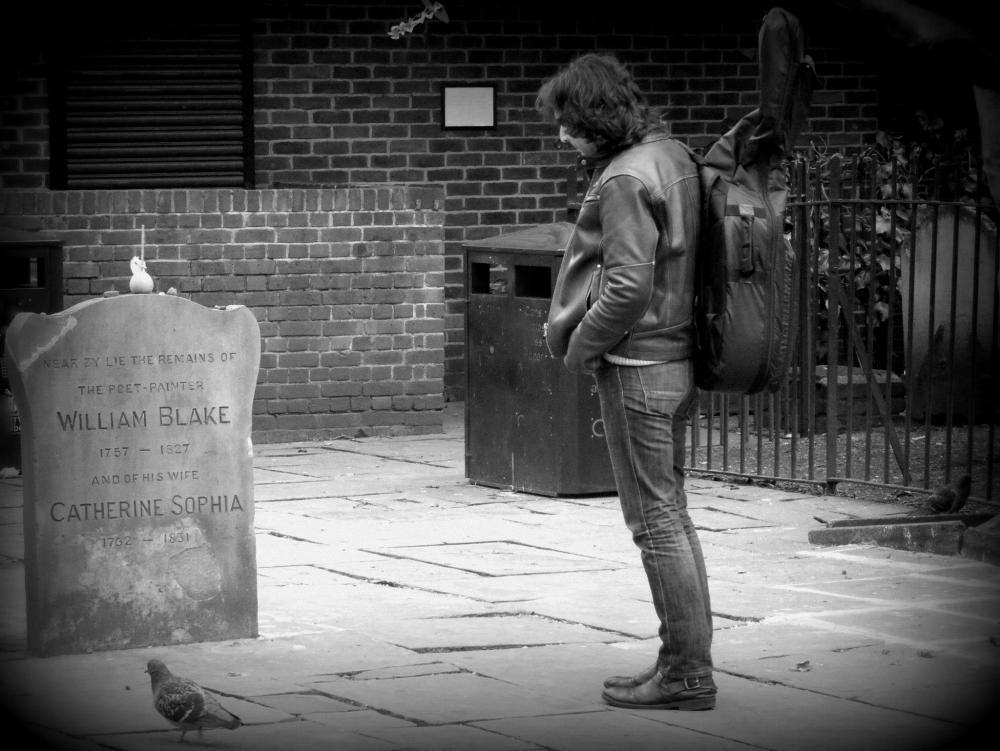
Can’t think of a better way to open an album other than a bit of good old William Blake, could you? I instantly fell in love with his body of work the moment I first encountered a painting of his, getting overwhelmingly humbled by his artistic industriousness, and naturally, I have since spent hours and hours in TATE gallery looking at his artwork. I initially got into his work after listening to Bruce Dickinson‘s 1998 album ‘The Chemical Wedding‘ heavily based on Blake‘s work, with some verbatim lyrics, using Blake‘s tempera painting ‘Ghost of a Flea‘ (I prefer his watercolours if I am honest) as the album’s cover. The album had to grow on me (to then consider it as one of the best metal albums of all time), whilst my fascination with Blake had taken off.

I remember my friend (and relative) Dimitris Athanaselos, who had briefly played the drums for Phase and has since got into writing, had borrowed from his school library a translated (actually a particularly good translation given the complexity of the endeavour, bar the name for Nobadady that is translated to the somewhat cringeworthy, yet inventive, ‘Κανέμπαμπας’) anthology of poems, letters and essays which I procured in order to photocopy as I could not obtain it from the local bookstores, whilst the internet was a different beast back then. Furthermore, I had already finished that school and I had fallen out of the librarian’s favour anyway after inadvertently water-damaging a copy of Bram Stoker‘s ‘Dracula‘ that I had to pay for, following a dramatic radiator leak incident in my room (a few CD booklets had the same tragic fate, including Ozzmosis, Load and Reload). I naturally became a member of the William Blake Archives website, subscribing to their newsletter a couple of years after it started, and have put my hands on all things William Blake that I could reasonably have access to.
The use of juxtapositions in those lines reminded me of Heraclitus‘ ‘unity of opposites’, the ever-changing dual nature of everything (e.g., love and hate being two sides of the same coin), and how opposites are part of the same thing and do coincide. I also pondered about how people tend to recognise qualities in others, through projection, and only because they have those themselves in their own varied degrees, as well as how there is a point of cognitive association or identification with someone who has just the right amount of everything. Hence the ‘There’s a place where you can… Meet me there.’ line.
Another expression of that would be that we tend to attract people that are of the same level with us, or who have the same psychological wound, and similarly where one of the two parts of the equation works on it whilst the other doesn’t they are leaving eachother behind. Be it in friendship or a romantic relationship.
The Ad-vantage point
The above originally intended as placeholder lyrics for the hooks ended up being kept as it sometimes happens, and they might, or might not be deriving from the mid-2000s Heineken‘s (I admit to have drank thousands of litres of it by that time – drink responsibly folks!) ‘Meet you There‘ campaign. After giving it some thought, we decided it was fine (as it could really have been worse, like a laundry detergent slogan or something), and it served as an easter egg reference to what the Doors had done on ‘Touch Me‘ with Ajax‘s ‘Stronger than Dirt‘ motto.

I thoroughly enjoyed consuming advertisements (proper meta-capitalistic of me), valuing them as an art form, as I found advertising to be an intellectually and emotionally stimulating medium since I was really young. I am also humbled in front of what a powerful psychological tool advertisements make, and the ease they can seamlessly etch messages into our subconscious.
I nearly started an advertising agency with our longstanding friend and graphic designer Aris once or twice, but always had reservations as to the ethical implications that could come with, especially when looking at the origins of the trade and what Edward Bernays‘ (the father of PR and Marketing, and Freud‘s nephew who interestingly enough managed to successfully market his uncle’s publications using ideas inspired by him) managed to do with this platform so I kept myself away from that domain, and decided it wasn’t for me, each time whenever this was put on the table.
Sorbo’s Sober Advice
Relatedly, I can’t tell you how hard we have been laughing with Damos about an incident, where I had been out of my mind drunk after a gig in Bulgaria, and after finishing all the gin they had in the bar, I gathered all my thespian talent and gave the barmaid my best Kevin Sorbo impression asking for a Jim Beam. I hardly ever have any bourbon, if at all, and yet this jumped instantly straight out of my subconscious when I was most vulnerable (or shitfaced, to be colloquially most accurate).
Back to the music, I can clearly remember laying down the vocals in my grandmother’s house. The two channels you hear on the record are one take each and that’s really all about it, as it was really the best it could get at that point anyway! The riff must have been around since 2004, and we’ve tried to put it together in the past with Damos way before he actually joined Phase, but in his own words, he couldn’t quite get it at the time.
Using Record Store Day 2019 as an excuse we released ‘the Smile‘ as a maxi single
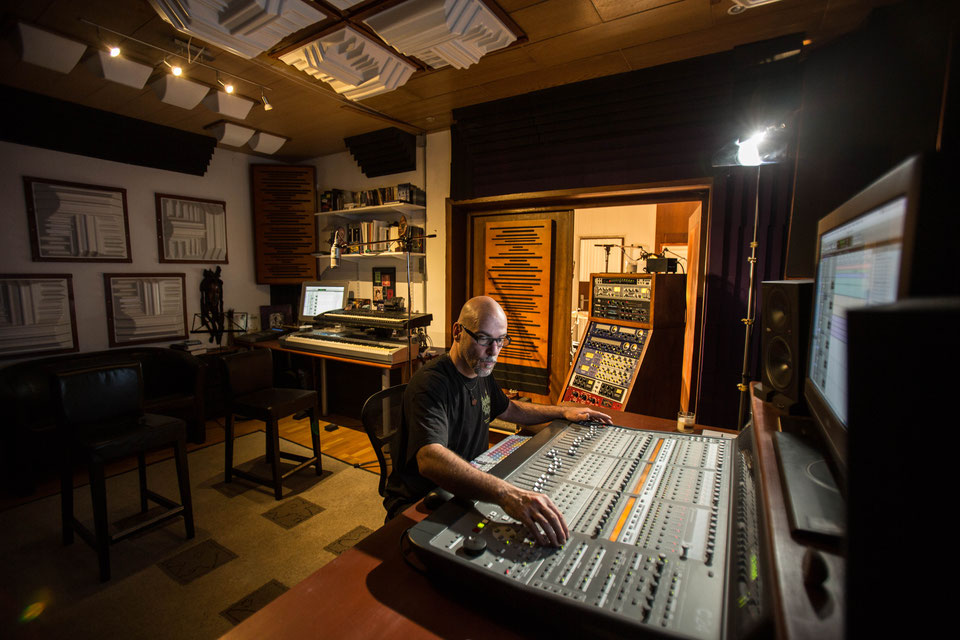
The 2019 remaster was done by Tasos Karapapazoglou at his Nemesis studios in Kavala. And there’s a take by Devon Graves (Buddy Lackey of Psychotic Waltz / Deadsoul Tribe) who was to lay a flute track for ‘A Void‘ originally, something that didn’t end up happening in the end for some reason neither of us can’t quite recall, so it’s great having him being involved in this project, 10 years down the line!
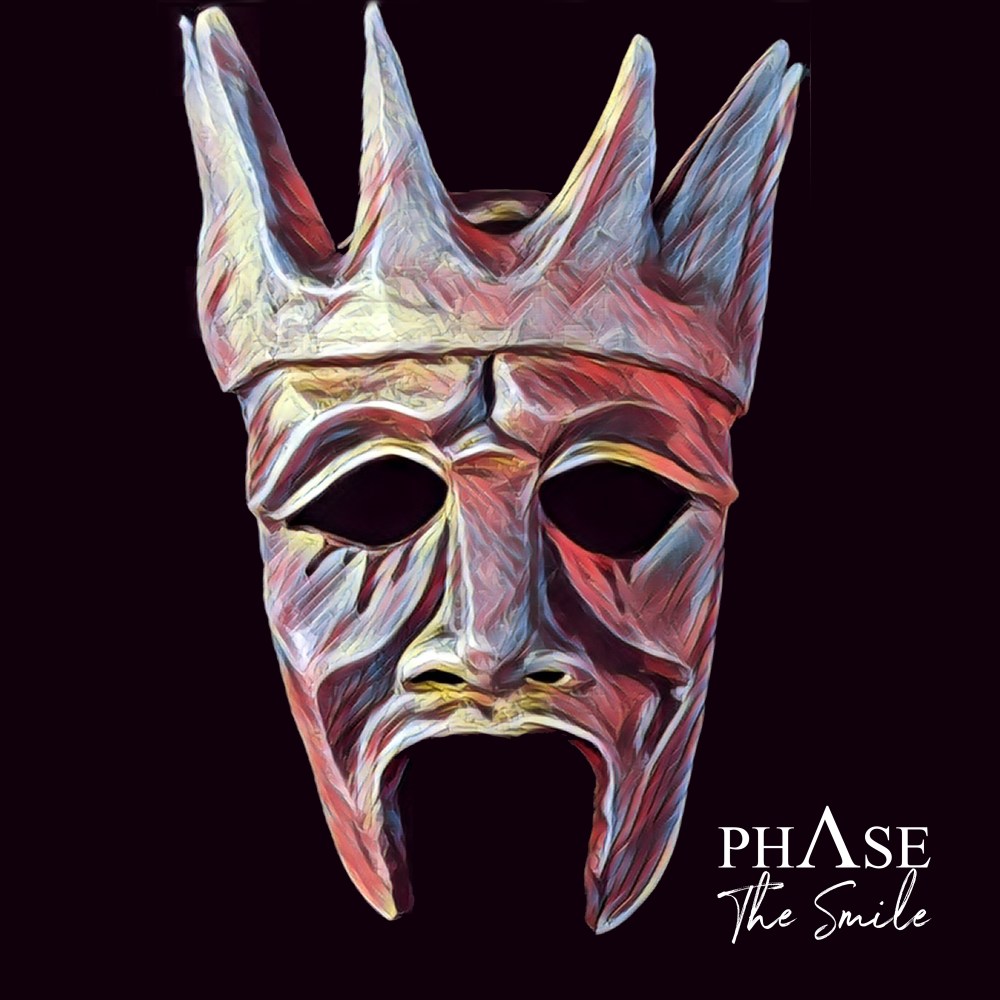
The release ends with a remix by Foks that elevates the release to a whole different dimension, whilst the cover is based on a beautiful Oedipus theatre mask done by Jonathan Becker!
Some Masks Come off, Some Masks Don’t
In ancient Greek tragedy, masks served a multifaceted function. Primarily worn by actors, these masks amplified facial expressions ( herein a smile, despite the artwork’s mask being intentionally mouthless), making emotions and characters more discernible to a large audience in open-air theatres.
Additionally, masks played a symbolic role, representing specific characters, gods, or archetypes. They enabled actors to switch roles seamlessly, enhancing the theatrical experience and contributing to the larger-than-life atmosphere of Greek tragedies. However another less written-about function of masks would be to separate the actors from the characters they play, and I don’t mean it like protect them from being identified like their most iconic roles and seen as one-trick ponies (like maybe Daniel Radcliffe with Harry Potter), but more like protecting the actors from the intense psychological event they take part in, and help them distance themselves after it finished. This would be a stylish way of avoiding what David Lynch‘s universe wants the Hollywood dream machine to be doing to actors.
[Some multimedia content was added ex post facto]
 Phaseship - The Phase Archives
2 Comments Add yours