I think the liner notes on the digital release of the remixes EP circa 2018 sum most of it up, so to avoid duplication I am citing that below:
‘Point of You‘ must have been written sometime in 2012, in a practice room in Greece at a time when we already had a few songs down for ‘the Wait‘. Damos had just bought a MIDI controller that he brought in with him, and while we went out on a break he stayed back inside fiddling with that, coming up with the song’s main piano melody. The main riff was modeled after ‘Sowing Scorn‘ which in turn used ‘The Smile‘ as a blueprint; solidifying that way the distinctive Phase sound. It was first released in April 2014 as part of ‘the Wait‘ album to then be re-released as a single after radio producer Tom Robinson stumbled upon it and handpicked it for his BBC6 radio show, including a remixed version that is also featured on this very release.
At the time, I was fascinated by the idea of how one can be dismissive of another’s qualities, good or bad, just because they can’t trace those in themselves, either because they do not possess those or they can’t understand the varied levels those tend to present in, likely due to an empathy gap. The song is about how one tends to constantly project themselves onto others, or ‘measure up’ in their attempts to understand the other and their place in the symbolic hierarchical order. This is directly related to our tendency to be bringing things into our cognizable dimensions to try and understand those, like religions do with anthropomorphising nature and the supernatural, or cartoonists do with animals. The downside, where one is not conscious enough, would be ending up having only a fragmented, distorted image of others, exactly like how Stanislaw Lem beautifully demonstrates in Solaris with his philosophical parallel of the asteroid, that brings to life the versions of people, in the ‘image and likeness‘ their yearners had in mind of them, overlooking any qualities that were caught on the periphery of their blind spots. When it comes to the song’s hooks, it is unclear whether the narrator (as in the literary device for the purposes of exploring the idea- to close down any concerns and escape any liability of being sectioned; I’m not talking about my self in the third person!) addresses someone whom they can only partially identify with, and whom answers are sought from, or if it is a reference to their own agency; and that’s all I am going to divulge, not to diminish the polysemic potential of the song.
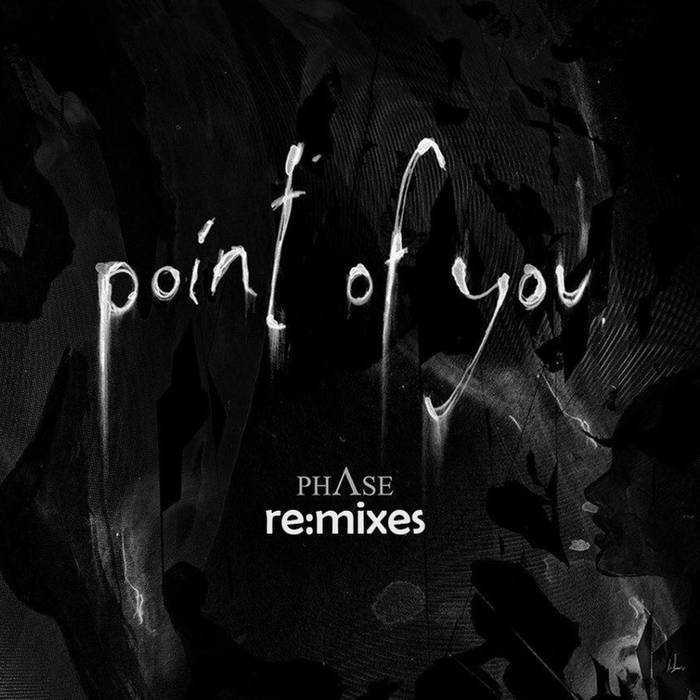
Celebrating four years since its initial release, we’ve put this little compilation together for you including, aside from the original remix, a mix by our longtime friend Vangelis Yalamas who polished the sound of the song, amazing remixes by Moxxsy and Louis DeLarge that are excellent songs in their own right, a beautiful piano version of the song our own Vasilis Liapis has laid down, and an 8-bit chiptune version of the song because we’ve all spent endless hours on our gaming consoles growing up. We are preparing a nice surprise in regards to the latter that is unfortunately going to take a while to materialise, so stay tuned!
At its core, Point of You is a meditation on personal and emotional discovery, exploring the tension between how we perceive others and how we perceive ourselves. The repeated plea to ‘step away from the sun‘ in the lyrics, is a call for authenticity, a request to strip away superficial layers and reveal something real.
The song’s verses delve deep into existential and relational struggles, with the opening lines setting a tone of resilience and self-awareness, for the lyrics to then move on to capture the cyclical nature of human connection, suggesting that giving and receiving are inextricably linked.
The hooks are where the song shows its introspective moments that blur the boundaries between self and other:
“When I look at you / I sense what’s there of me.”
This interplay of reflection and projection raises questions about how much of what we see in others is shaped by our own biases and blind spots.
Reflection and Meaning
At the time of writing, I was fascinated by the idea of how we project ourselves onto others in an attempt to understand them. It’s a universal tendency: we measure others against our own qualities and experiences, often failing to see them as they truly are to a certain degree. However, this is specifically a blunt commentary to those who are lacking in empathy, and therefore the capacity to meaningfully enter the other’s experience, as they can only project pieces of themselves onto the other.
This idea ties into the song’s philosophical undertones, echoing the themes explored in works like Stanislaw Lem’s Solaris as explained on the aforementioned liner notes. The book’s concept of recreating people based on fragmented memories resonates with the fragmented, distorted images we sometimes hold of each other. And also deeply resonates with the Lacanian concept of the ‘Big Other‘ and Leo Tolstoy‘s (through Konstantin Levin) observation in Anna Karenina that no one ever fully knows another person. According to Lacanian theory, our sense of self relies on an external authority; a trusted figure we believe understands and validates us. This “Big Other” becomes the repository of our consciousness, enabling us to exist more fully through their recognition.
The song’s ambiguity is intentional. Is the narrator addressing another person, seeking answers from them? Or are they speaking to their own sense of agency, grappling with internal conflicts? The beauty of Point of You lies in its open-endedness, inviting listeners to find their own meanings within its layers.
follow the link below for a further analysis on the lyrical content:
https://genius.com/Phase-point-of-you-lyrics
The Evolution of the Song
Over the years, Point of You has taken on multiple forms. In addition to the original mix, the re-release included contributions from our longtime friend Vangelis Yalamas, who is responsible for the first-ever complete mix of Perdition, and whose polished remix of Point of You added a new layer of depth. Remixes by Moxxsy and Louis DeLarge brought fresh perspectives, turning the song into something entirely new yet undeniably rooted in its original essence. The Saint‘s piano rendition stripped the song back to its emotional core, with Damos producing beautifully what the former delivered (albeit in a traditionally ‘fashionably late’ manner), while the 8-bit chiptune version added a playful, nostalgic twist; a nod to the countless hours we spent gaming as kids.
The original artwork was kindly done by the incredible Alexis Marcou, and its negative was used for the re:mixes release. Aris Liapis created the beautiful artwork featuring the floating piano keys, whilst the talented Effie Serleti posed for the front cover’s photo.


 Phaseship - The Phase Archives